

With support from EM Tuition tutor Debbie, this young learner began rebuilding trust, communication and engagement through a personalised, play-based approach tailored to his needs.
The Challenge
This young learner had experienced significant change in a short period of time. After moving home and leaving behind his previous school, therapies and routines, he found himself learning at home without the structure, peers or predictability he relied on.
Non-verbal and autistic, he communicated through gestures, sounds and a tablet. He was highly sensitive to his environment, where even small changes could lead to overwhelm. Too much noise, silence, distance or closeness could all trigger dysregulation.
Although full of curiosity and energy, learning had become difficult. He resisted teacher-led activities, avoided books and mark making, and relied heavily on movement and sensory play to feel safe.
At the same time, professionals were working to identify a suitable school placement. In the interim, the family faced uncertainty, isolation and concern around the lack of routine and engagement.
Debbie’s Approach: Building Trust Through Attunement and Play
From the outset, Debbie focused on creating safety, connection and consistency. This became the foundation for all learning.
Sessions were carefully structured yet flexible, always guided by the learner’s needs and interests. Debbie:
- Established a predictable daily routine to create a sense of security
- Tuned into subtle cues, including changes in expression, sound and movement
- Gave space when needed, never pushing beyond what he could manage
- Joined his sensory play rather than interrupting it, allowing him to lead
- Used Makaton and PECS to support communication
- Embedded learning into activities he already enjoyed, such as bubbles, sand, balloons and movement
What began as brief moments of engagement gradually developed into longer periods of shared attention and interaction.
Through patience and consistency, trust was built step by step. Over time, he became more open to gentle guidance, trying new activities because he felt safe.
Support Beyond Sessions
Debbie’s role extended beyond structured learning sessions. She worked closely with the family to ensure continuity, stability and emotional support.
This included:
- Daily communication with the family to maintain consistency
- Sharing practical strategies to support routine at home
- Using social stories to prepare for transitions and future school life
- Providing reassurance during a period of uncertainty
When the learner became overwhelmed, Debbie prioritised regulation over correction. When he resisted, she adapted. When he communicated in his own way, she responded with understanding.
She created an environment where he felt seen, heard and safe.
The Outcome
Progress was gradual but deeply meaningful.
Over time, the learner began to:
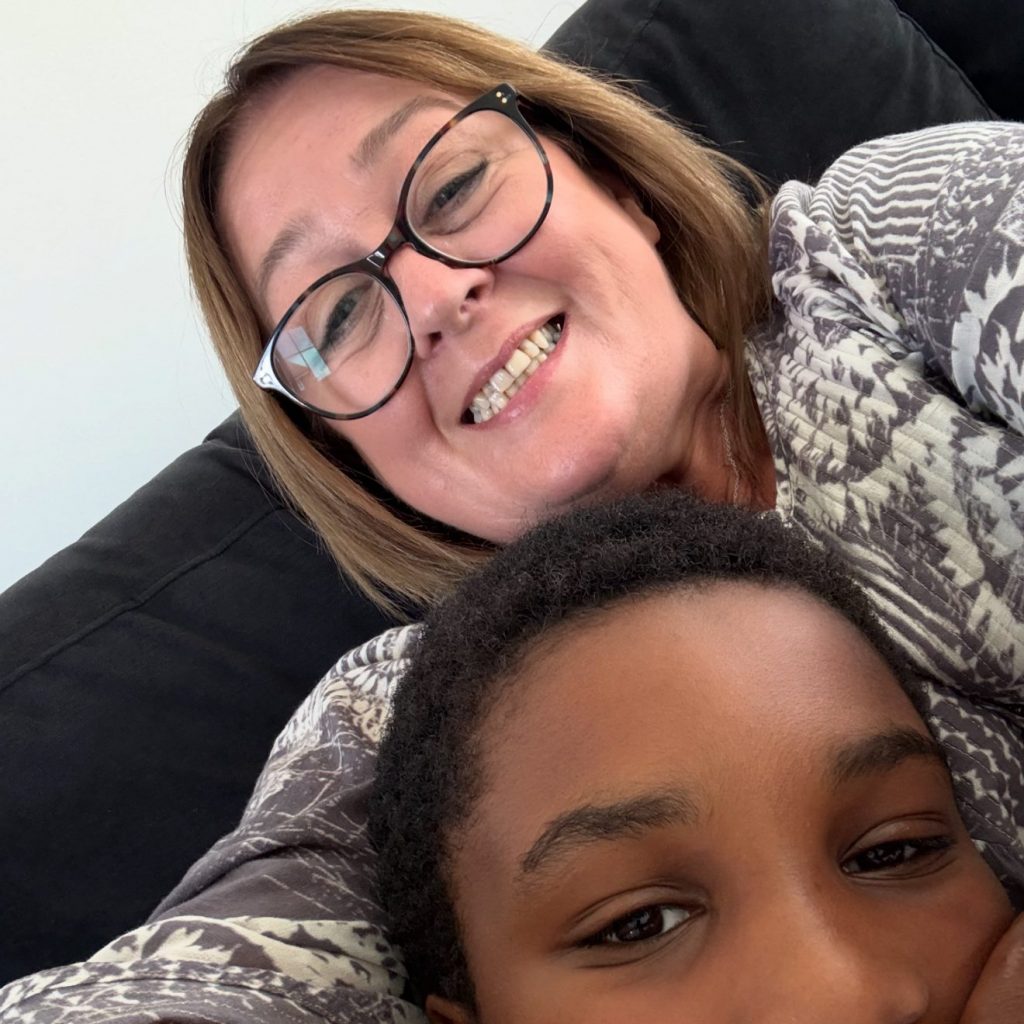
- Greet Debbie with smiles, laughter and anticipation
- Engage in shared reading, pointing to pictures and participating actively
- Indicate when he needed a safe space instead of becoming distressed
- Follow short, structured activities with increasing confidence
- Identify colours, sort objects and begin early counting
- Form shapes, lines and early letter patterns through sensory and written activities
- Communicate more intentionally using gestures, sounds and pointing
One particularly significant moment came when he called out Debbie’s name, a milestone that reflected the level of trust he had developed.
As his confidence grew, he explored writing his name, engaged more with the world around him and participated in movement and creative activities.
He was learning through connection, not pressure.
A New Beginning
In time, the learner was offered a place at a specialist SEN school.
The family shared a photograph of him wearing his new uniform, standing confidently and smiling, a powerful reflection of how far he had come.
Even after the transition, he continued to recognise and connect with Debbie, pointing to her image on his communication device.
The family shared their appreciation:
- “So thankful for people like you.”
- “He enjoys Debbie’s company and we thank her for all she is doing.”
- “The routine is helping him settle.”
- “Debbie is punctual and keeps us informed.”
- “Your input in the recent meeting was so gratefully received.”
- “He will miss her.”
These reflections highlight the trust and impact built over time.
Why This Matters
This case highlights the importance of connection-led support in SEN education.
For Debbie, communication extended beyond words. Small gestures, shared moments and emotional attunement became the foundation for learning.
It reinforced a simple but powerful principle:
Connection comes first. Learning follows.
Through patience, consistency and understanding, this learner was able to rebuild confidence and transition into a new educational setting with a strong foundation in place.
Looking for SEN Support for Your Child?
If your child is experiencing challenges with engagement, routine or confidence, EM Tuition provides personalised SEN support and alternative provision tailored to each learner.
👉 Get in touch to learn how we can support your child’s journey.