

I think we can all remember a time in education when we just didn’t get something. For me, it was learning about Pi in Year 7. Infinite numbers? Circles? Let me go and explore Pi in a Food Tech class, thank you very much. It wasn’t until my teacher showed me visually by zooming and zooming in on a circle that the penny dropped. It only made sense to me in that moment. So, why didn’t I get it before?
Every learner is different. Every person sees the world in a different way.
Conveying information is easy enough, unless you’re trying to remember Pi off the top of your head, but packaging that information, assembling all the parts in such a way that it can be seen clearly through the learner’s lens, there’s an art to that. Teachers know this. They’re experts at putting metaphors and formulas in the right place. But a big classroom with lots of noise and distractions?
It’s not for everyone.
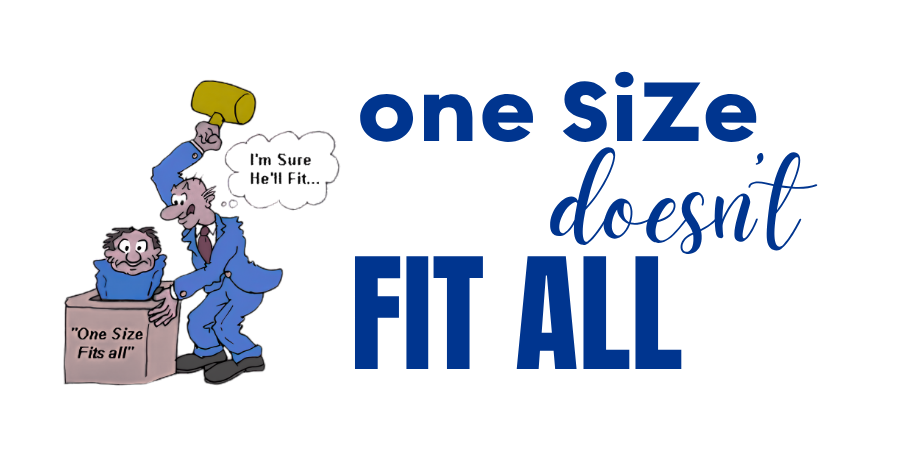
When it comes to education, there is no one-size-fits-all approach, and alternative education aims to be exactly that: alternative. No learner is the same, and no journey is the same. That’s why we ask ourselves: what can we do to meet these learners’ needs right now?
And it’s not just about getting everything in the right place, either. Imagine you’ve taken the time to prepare your lesson, you’ve got everything printed, and you’ve even come up with a new warm-up game. What do you do if your learner just isn’t feeling up to it that day? One of the many benefits of alternative education is flexibility. We meet the young person where they are on that particular day. If a young person feels they need a break, but they can’t leave the classroom, that could mean a whole lesson is missed because of anxiety.
One of the things I love about alternative provision, especially when it’s 1:1, is that it can be more learner-led. Need a break? No problem. Want to switch activities? Here’s something else.
A key word for me is trust. It’s important that the local authority trusts us to do our best. It’s important that parents and carers trust us to keep their children safe. And it’s important that we trust our tutors and mentors in the field. But one of the biggest things, and it is a big one, is that the young person trusts their tutor or mentor.
Without focusing on the relationship first, before building trust, how can we expect the young person we’re supporting to feel safe when presented with a challenge? How can we build a space where mistakes are okay? Most people I know struggle with making mistakes, and I know that when I make one in front of a stranger on an unrelated note, how has your driving been recently? I dwell on it for days.
That’s why, whenever I set up a provision, one of the first things I say to parents and carers is: we’ll take things slowly. Let’s get to know each other first before jumping in.
A note on mentoring
I was recently asked to describe mentoring. Describing tuition is easy: it’s a 1:1 personalised lesson that supports a young person to get to where they want to go. But mentoring? Not so easy. But why?
Mentoring is more about life skills: supporting a young person to navigate the complexities of everyday life. I found that my answer to the question gave lots of examples, such as helping a young person work out a bus route or accompanying them to the shop to buy their favourite chocolate bar with the right change. But a summary? I was stumped.
It was actually one of the mums we’ve recently started working with who summed it up best. Her daughter rarely leaves the safe space of her bedroom. She said, “I just want someone to expand her horizons, even if those horizons are as close as the front garden.”
I’m happy to report that we’ve since made it to the hall. For her, the world is quite literally expanding one step at a time.
I can’t wait to see what happens next.

Written by Ashley Browning
Essex Contracts Manager, EM Tuition
At EM Tuition, the focus is simple: understanding the learner first, and building everything else around that. If you would like to explore how personalised, one-to-one support can help autistic learners feel more confident and engaged, we would be happy to speak with you. Get in touch