
From Overwhelm to Engagement: A Story of Patience, Play and Progress
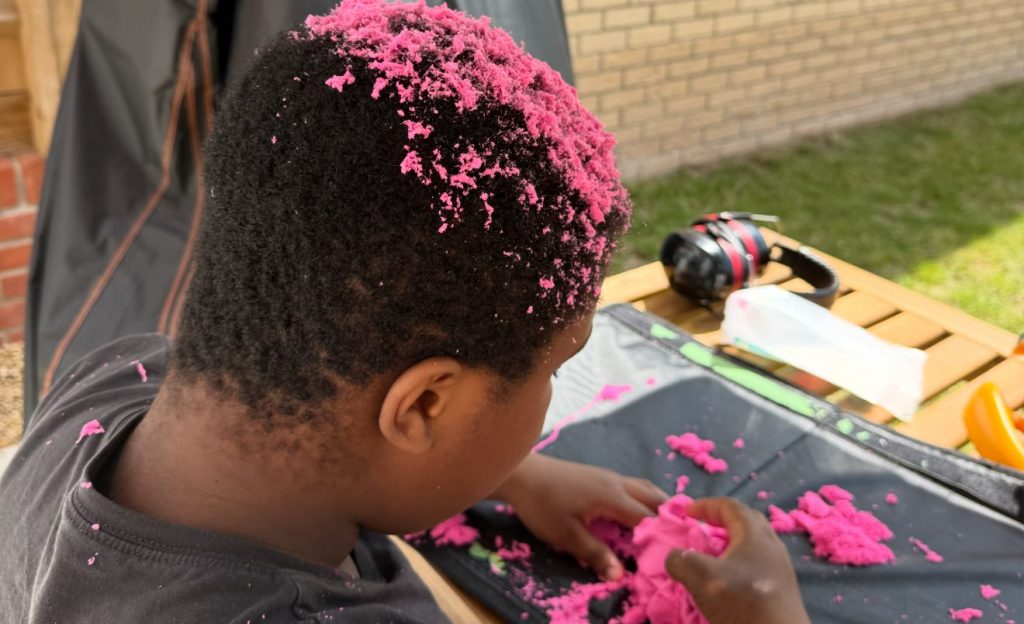
This young learner had been through enormous change in a short space of time. After moving home and leaving his previous school, therapies and routines behind, he suddenly found himself learning at home without the structure, peers or predictability he depended on. Non verbal and autistic, full of energy and sensitivity, he communicated through gestures, sounds and a tablet. Small changes could overwhelm him. Too much silence, too much noise, too much distance or too much closeness could all trigger dysregulation.
Despite his strengths, joy and curiosity, learning had become difficult. He resisted teacher led tasks, avoided books and mark making, and relied on movement and sensory toys to feel safe. Professionals were searching for a suitable school, but in the meantime, the family worried about the lack of routine, the isolation and the uncertainty ahead.
But Debbie didn’t.
Breaking Through With Trust, Attunement and Play
From the very beginning, Debbie focused on safety, connection and routine. That was the real curriculum. Sessions were gentle, predictable and built around the learner’s interests. Debbie:
Used a familiar routine every morning so he always knew what would happen next
Tuned into his smallest cues, noticing changes in expression, sounds and movement
Gave him space and never pushed beyond what he could manage
Joined his sensory play rather than interrupting it, waiting for him to invite her in
Used Makaton and PECS to support communication
Embedded learning into activities he already loved, such as balloons, bubbles, sand and movement
What began as moments of engagement grew into minutes, then into longer stretches of shared play and learning. Debbie never rushed. She let trust build slowly, through consistency, smiles, and small successes.
Over time, he allowed Debbie to guide parts of the session, accepting gentle direction and trying new things because he felt safe doing so.
Support Beyond the Lesson
Debbie’s commitment stretched far beyond the academic goals listed in the EHCP. She:
Supported the family daily, keeping them informed and helping rebuild routine
Provided strategies they could use at home to maintain continuity and predictability
Used social stories to help the learner understand transitions, moves and future school life
Offered consistent emotional support at a time of uncertainty
Built a relationship rooted in respect, patience and hope
When he became overwhelmed, Debbie didn’t correct or contain him, she offered a safe space. When he resisted an activity, she adapted. When he communicated in his own way, she listened.
She created a world where he felt understood.
Transformation and Trust
The difference was steady and remarkable.
This young person began:
Greeting Debbie with smiles, laughter and excitement
Choosing books for shared reading and pointing to pictures she named
Signalling when he needed the safe space instead of becoming distressed
Following short teacher led activities with growing resilience
Identifying colours, sorting objects and counting with finger movements
Forming lines, shapes and early letters in sand, on whiteboards and later with pencils
Pointing, gesturing and using sounds to communicate more intentionally
One day, he shouted Debbie’s name – a moment so significant that his parent came running to share it. It was the kind of moment that only happens when a child feels completely safe.
With his confidence building, he began drawing over the letters of his name, exploring the seasons outdoors and joining Debbie in movement and dance. He learned through joy, not pressure.
A New Beginning
Eventually, the family received the news they had been hoping for: he had been offered a place in an excellent SEN school. They sent Debbie a photograph of him proudly wearing his new uniform, standing tall and smiling — a picture that said everything about his journey.
They shared how he had pointed to Debbie’s picture on his tablet, showing that their connection remained even as he transitioned into his new setting.
The family expressed their gratitude often:
“So thankful for people like you.”
“He enjoys Debbie’s company and we thank her for all she is doing.”
“The routine is helping him settle.”
“Debbie is nice, punctual and keeps us informed.”
“Your input in the recent meeting was so gratefully received.”
“He has enjoyed his interactions with Debbie and will miss her.”
These were not just compliments. They were evidence of trust rebuilt.
Why This Work Matters
For Debbie, what made this case special was not only the progress he made but the way he communicated without words. His smiles, his gestures, his shared laughter, his sparkling eyes and small steps of courage spoke louder than speech ever could. She learned to wait, to watch, to follow his lead and to let play become the pathway to learning.
She realised once again that children do not need words to form relationships. Connection comes first, teaching second.
Her belief, patience and attunement gave this young person the stability he needed to learn again. And when he finally stepped into his new school, confident and ready, he carried with him the foundation that Debbie spent months gently building.